Quick answer: A cluttered room asks something of you every time you walk through it, even when you have stopped consciously noticing. Clearing surfaces removes those small unfinished demands, which is why a tidy room feels restful in a way that has little to do with how it looks.
I left office management to declutter other people's homes, and the thing that surprised me was how rarely it was about the stuff.
Mess is a list you cannot put down
The most useful way to think about clutter is that every object out of place is a small unfinished task.
The coat over the chair is "hang me up". The pile of post is "deal with me". The toys on the floor are "tidy me". None of them is significant on its own, and you have stopped consciously reading them - but they are still there, and the room is still asking.
That is why a tidy room feels restful even when you cannot say what changed. You did not improve the decor. You put the list down.
You stop seeing it, not feeling it
The part people find hardest to believe about their own homes.
Clutter becomes invisible remarkably quickly. Something sits on a worktop for a fortnight and stops registering as out of place - it becomes part of the worktop. But the low-level friction does not disappear with the noticing.
The test is simple: notice how you feel walking into a room somebody else has just tidied. That difference was available in your own home the whole time.
Where baskets actually come in
Being straightforward, since this is a shop.
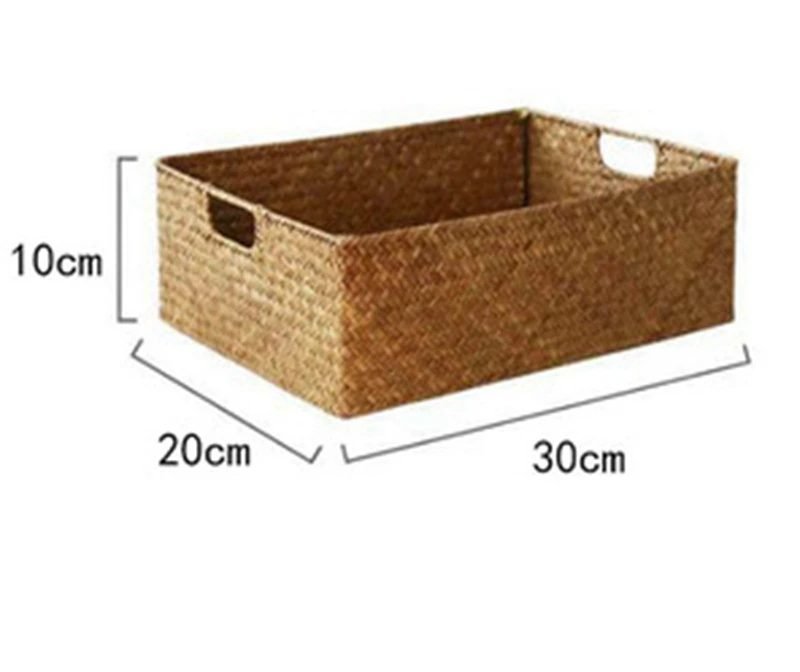
A basket does not declutter anything. It gives a category a home, which is a different and smaller claim. What it prevents is the slow drift where things end up on surfaces because there is no obvious alternative.
Most surface clutter is not laziness. It is an object with nowhere to go. Give it somewhere within reach of where it is used, and the surface stays clear on its own - which the visual clutter guide covers in more detail.
Where a basket does harm is when it becomes a place to put off deciding. A basket of unsorted paper is not storage; it is a delayed problem in a nicer container.
Start with one surface
Whole-house decluttering fails for almost everyone, because it takes a weekend nobody has and it looks worse before it looks better.
Pick one surface you see often - the kitchen worktop, the hall table, the coffee table. Clear it completely. Give the three things that genuinely live near it a home, and put the rest away properly.
Then keep that one surface clear for a fortnight. Do nothing else. The point is not the surface; it is finding out what a clear one does to a room you walk through twenty times a day.
The calm-home method covers building from there.
Rooms that matter most
Not all clutter costs the same.
The first thing you see coming home. The hallway sets the tone for walking in the door, and it is usually where bags, shoes and post accumulate.
Wherever you sit in the evening. This is where you spend conscious downtime, so visible mess costs the most - the living room guide covers it.
The bedroom. The last thing you see and the first thing you wake to.
The garage, the loft and the spare room can wait. Nobody is quietly worn down by a messy loft.
It is maintenance, not a project
The reframe that makes it stick.
People treat tidying as a project with an end, and then feel they have failed when the house is untidy again in a week. Homes get untidy because they are used. That is not failure, it is the point of a home.
What works is a small daily reset rather than a big occasional one - the renter guide covers doing this without altering anything permanent.
What it does not do
Worth saying plainly, because this subject attracts overclaiming.
A tidy house does not fix anything serious. It will not resolve a difficult period, and it is not a treatment for anything. Anyone selling you storage on that basis is selling you something else.
What it does is remove a small, constant, avoidable demand from a place you cannot leave. That is a modest thing, and on an ordinary Tuesday it is worth having.
The categories worth giving a home to
If you want somewhere concrete to start, these are the ones that cause the most surface clutter in most homes.
Post and paperwork, which lands daily and has no obvious home. A container with a hard limit works better than a large one - boxes and baskets has options.
Chargers and cables, which multiply and look worse than almost anything else on a surface.
Whatever is currently in use - the book, the knitting, the school letters. This is the category people forget, and it is the one that actually lives on the coffee table.
Shoes by the door, which spread further than any other single category - shoe storage covers that one.
Doing it with other people
Worth saying, because most homes are shared and this is where it gets difficult.
Decluttering somebody else's things without asking is the fastest way to end the project. What works is taking responsibility for the shared surfaces and your own things, and leaving other people's alone until they are interested.
In my experience people join in once they see a clear worktop for a fortnight. Very few join in because they were told to.
Browse the full range, fabric and woven baskets and grey baskets, with more in the complete guide.
The short version
- Every object out of place is a small unfinished task the room keeps asking you about.
- You stop noticing clutter long before you stop feeling it.
- A basket does not declutter - it gives a category a home so surfaces stay clear.
- Start with one visible surface and hold it for a fortnight, rather than the whole house.
- Treat it as maintenance rather than a project; homes get untidy because they are used.
Frequently asked questions
Why does a tidy room feel calmer?
Because every object out of place is a small unfinished task. The coat on the chair, the pile of post and the toys on the floor are all quietly asking for something. Clearing them puts that list down, which is what feels restful.
Why do I stop noticing my own mess?
Clutter becomes invisible quickly - something sits on a worktop for a fortnight and stops registering as out of place. The low-level friction does not disappear with the noticing, which is why other people's tidy homes feel different.
Do storage baskets actually help you declutter?
Not by themselves. A basket gives a category a home, which stops things drifting onto surfaces because they have nowhere else to go. It becomes unhelpful when it turns into a place to postpone decisions, such as unsorted paperwork.
Where should I start decluttering?
One surface you see often - the kitchen worktop, the hall table, the coffee table. Clear it completely, give the few things that live near it a home, and keep it clear for a fortnight before doing anything else.
Which rooms matter most for feeling calm?
The first thing you see coming home, wherever you sit in the evening, and the bedroom. The garage, loft and spare room can wait, because nobody is quietly worn down by a messy loft they rarely enter.