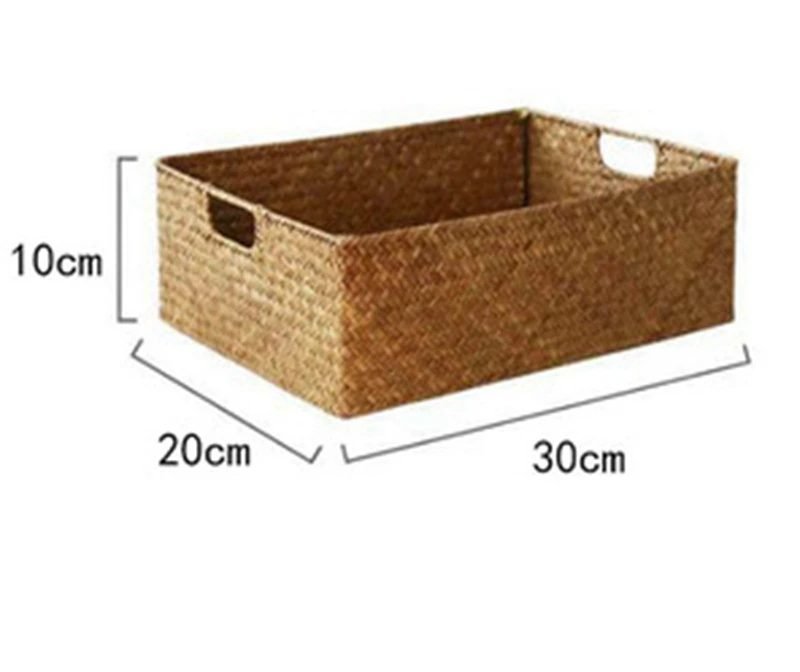
Quick answer: Measure the clear height, the internal width and especially the depth before buying - depth is what people forget, and a basket deeper than the shelf overhangs and looks wrong. Then buy multiples of the same basket rather than singles.
Shelving is where storage baskets do their best work and where most of the returns come from. Almost always for the same reason.
Measure three dimensions, not one
People measure width and stop. Width is the least of your problems.
Clear height. Not shelf spacing - the actual usable gap, allowing for anything on the shelf above and for lifting the basket in and out at an angle.
Internal width. Between the uprights, not the outside of the unit. On a cube unit these differ by several centimetres.
Depth. The one everybody forgets. A basket deeper than the shelf overhangs the front, which looks wrong and catches on people walking past.
Then take a centimetre off each as tolerance. A basket that fits exactly is a basket you cannot get out when it is full.
Depth is the one that matters most
Worth its own section because it is the most common error.
Shelf depth varies enormously - a bookshelf might be 20cm deep and a cube unit 30cm. A basket sold as "storage basket" could be either.
Too deep and it overhangs. Too shallow and you have wasted the back of the shelf, which is where things then get pushed and lost.
If in doubt, slightly shallower is better than slightly deeper. An overhang is visible from across the room; a small gap at the back is not.
Buy multiples, not singles
The thing that makes a shelf look designed rather than accumulated.
Four identical baskets across a shelf read as a system. Four different ones read as whatever was to hand, even if each is nicer than the matching set.
Sets are usually cheaper per basket than singles too. A fabric shelf basket bought several times over does more for a room than one expensive one.
Cube shelving specifically
The most common shelving in UK homes and the easiest to get right.
Cube openings cluster around a fairly standard size, and plenty of baskets are made to suit them. Even so, measure - "cube storage basket" is not a guaranteed fit, and unit designs vary.
Soft-sided fabric baskets are forgiving here, because they squeeze slightly. Rigid ones do not, so those need the measurement to be right.
The shelf and cube range is the place to start, and the shelf guide covers room-by-room use.
Handles, and why they matter here
On a shelf above waist height, a basket without a handle is genuinely awkward - you end up gripping the rim and dragging it.
Look for handles that are cut into the side rather than sticking out, since protruding handles eat into the width you measured so carefully.
Low shelves matter less, because you can see in and lift from above.
What to put in what
Eye level - things you use often, in open baskets you can see into.
Above eye level - light things only, and ideally labelled, because you cannot see in from below.
Bottom shelf - heavy things, and anything children need to reach.
Weight low, light things high is the general rule, and it also stops a tall unit becoming top-heavy.
Leave some shelf empty
The bit that makes it look considered.
A shelf packed corner to corner with baskets reads as a storage wall. Leaving some open space - books, a plant, nothing at all - makes the baskets look chosen rather than crammed in.
Alternating basket rows with open rows is the easiest way to do this, and it also gives you somewhere to put things down.
Rigid or soft-sided?
The choice that decides how forgiving your measurement needs to be.
Soft-sided fabric baskets squeeze a little, so a centimetre out is survivable. They are lighter, cheaper, and fold flat when not in use. They slump under heavy contents, so they are wrong for books or tins.
Rigid baskets hold their shape whatever goes in and stack reliably, which matters on a deep shelf. They are unforgiving about measurement though - too wide is simply too wide.
For a first purchase on unfamiliar shelving, soft-sided is the safer bet - rigid plastic is better once you know the dimensions work.
Labelling shelf baskets
Only worth it above eye level, where you cannot see in.
Below that a label is decoration rather than information — lidded baskets are the ones that genuinely need it — and it adds visual noise to a shelf you were trying to calm down. Where you do label, keep every label in the same position and the same style, or the labels themselves become the clutter.
Browse shelf and cube baskets, fabric and woven and white baskets, with more in the room-by-room guide and the complete guide.
The short version
- Measure clear height, internal width and depth - then take a centimetre off each.
- Depth is the most commonly missed dimension and the most visible when wrong.
- If unsure, slightly shallower beats slightly deeper; an overhang shows from across the room.
- Buy multiples of one basket - four identical read as a system, four different as a jumble.
- Leave some shelf open, or a run of baskets reads as a storage wall.
Frequently asked questions
How do I measure for shelf storage baskets?
Measure the clear usable height allowing for lifting the basket in and out, the internal width between the uprights rather than the outside of the unit, and the depth. Then subtract about a centimetre from each as tolerance.
Why does basket depth matter so much?
Because shelf depths vary from around 20cm on a bookshelf to 30cm on a cube unit, and a basket deeper than the shelf overhangs the front. That is visible from across the room and catches on people walking past.
Do storage baskets fit standard cube shelving?
Usually, since cube openings cluster around a fairly standard size and many baskets are made to suit. Still measure though, because unit designs vary. Soft fabric baskets are forgiving; rigid ones need the measurement right.
Should shelf baskets have handles?
Above waist height, yes - without one you end up gripping the rim and dragging the basket out. Choose handles cut into the side rather than protruding, since sticking-out handles eat into the width you measured.
How do I stop a shelf looking cluttered with baskets?
Use multiples of the same basket rather than a mix, and leave some shelf space open. Alternating rows of baskets with open rows of books or ornaments makes the storage look chosen rather than crammed in.